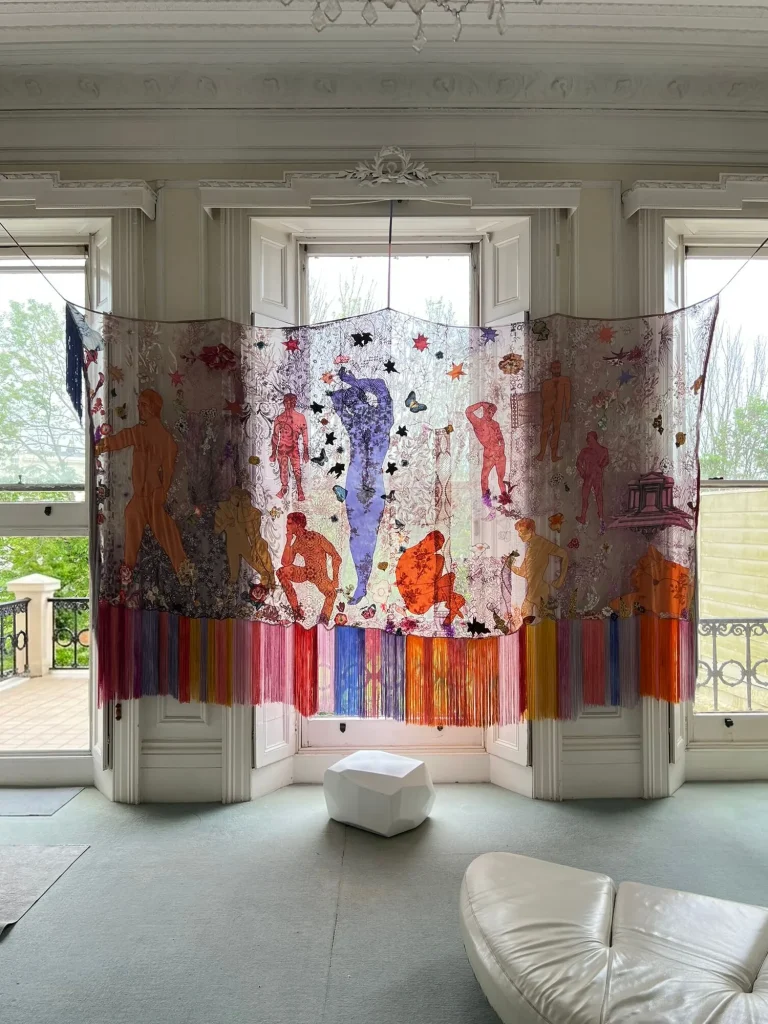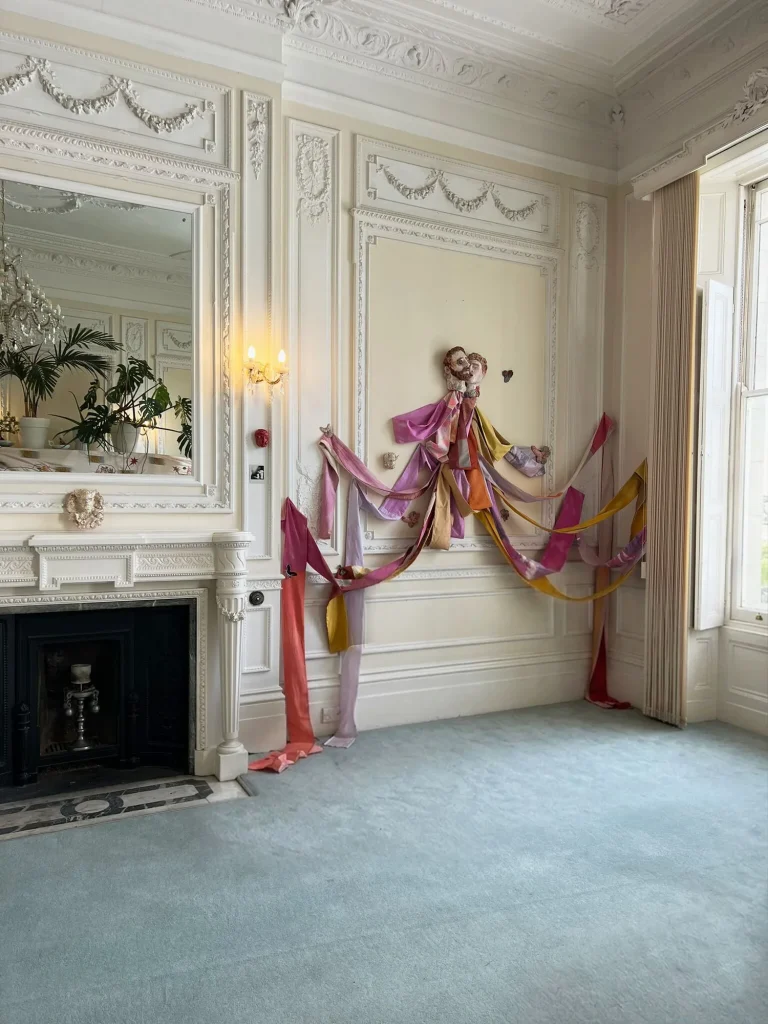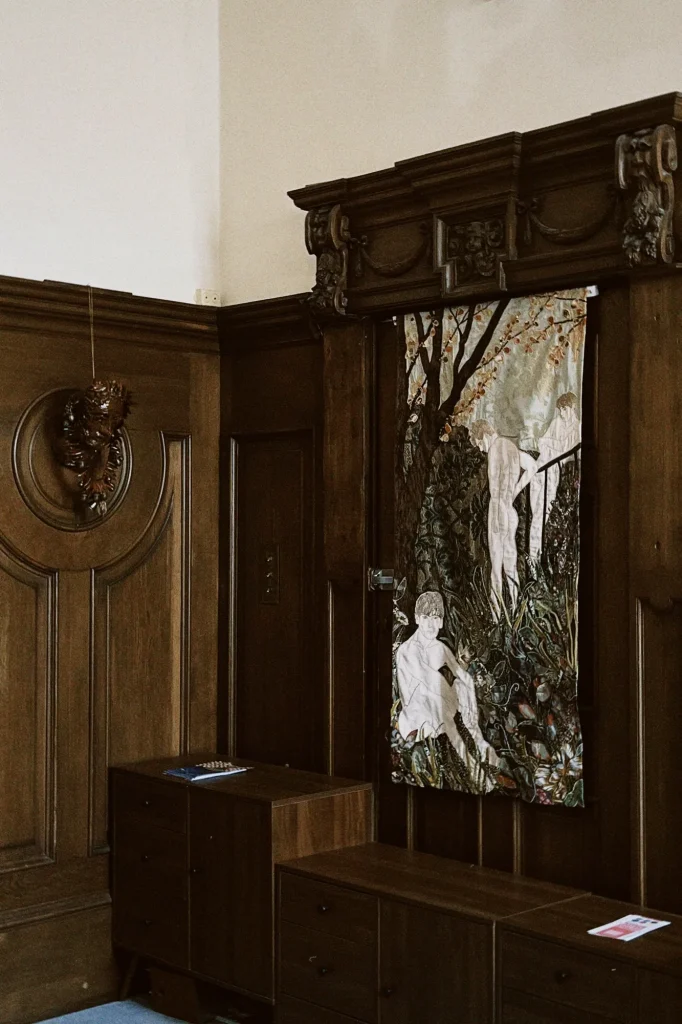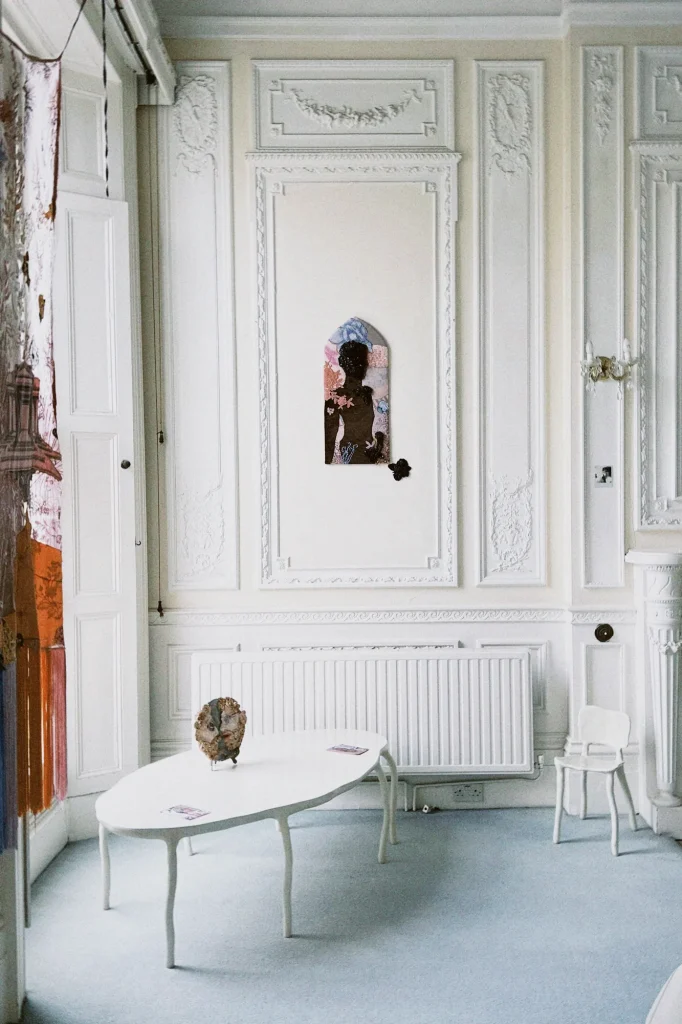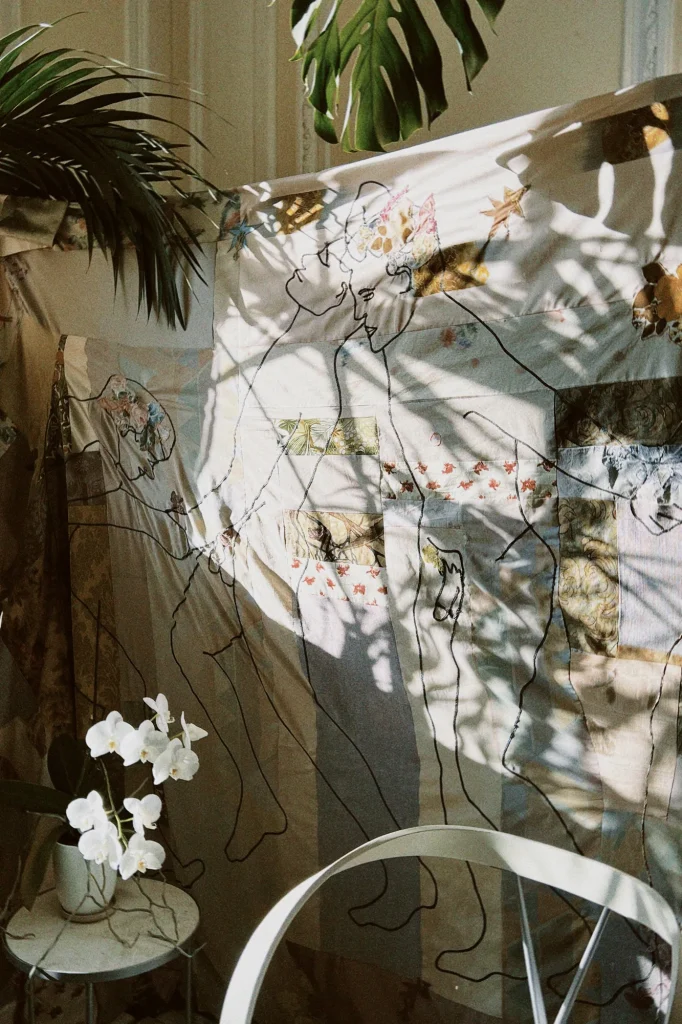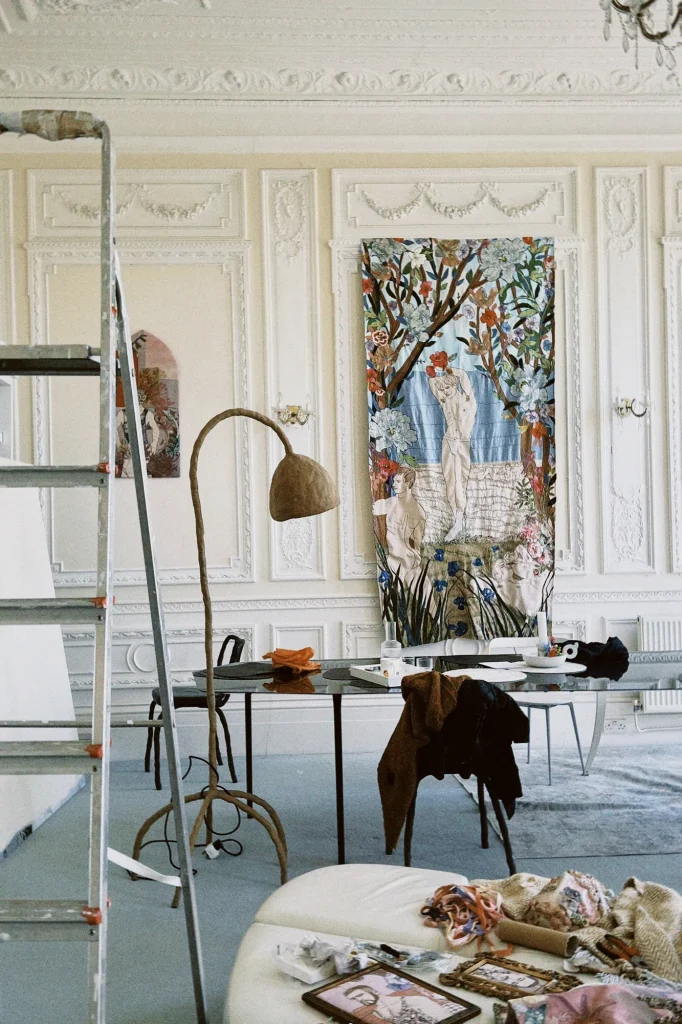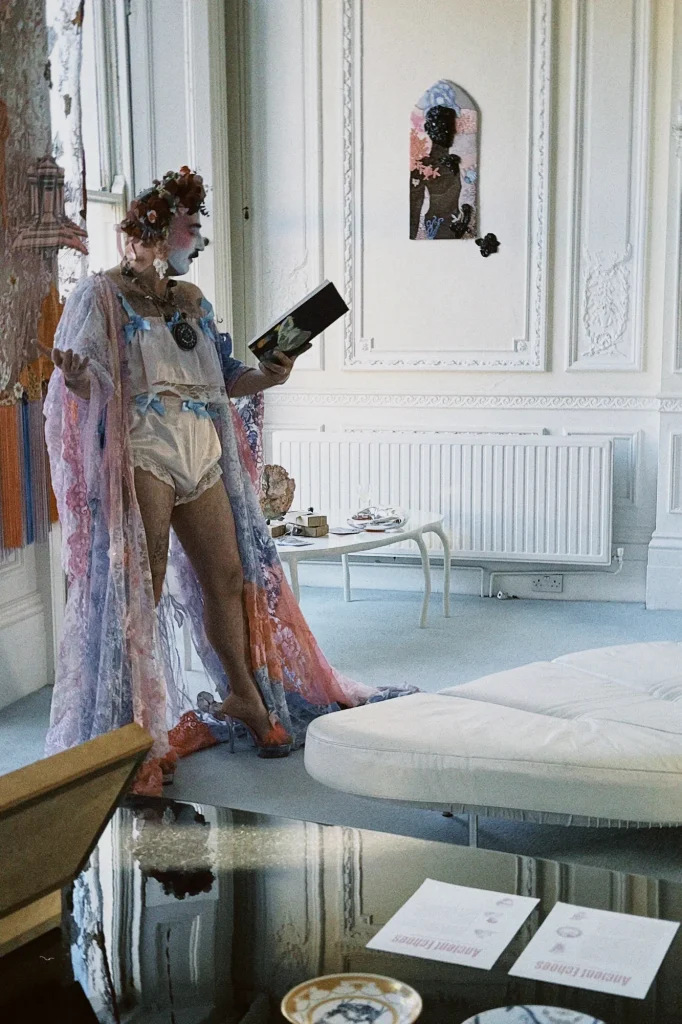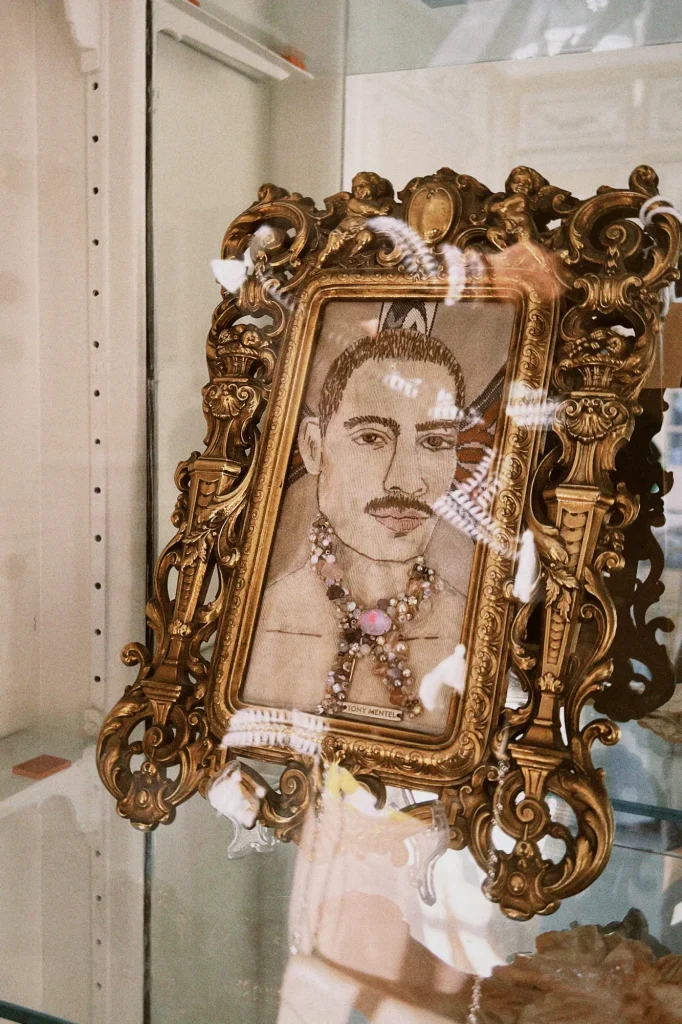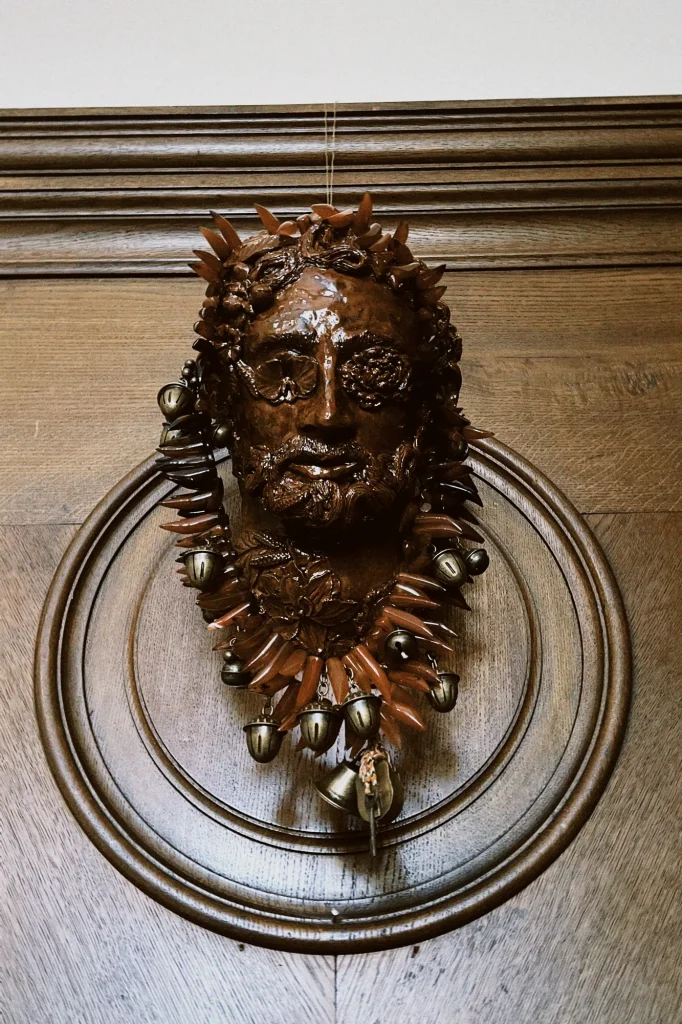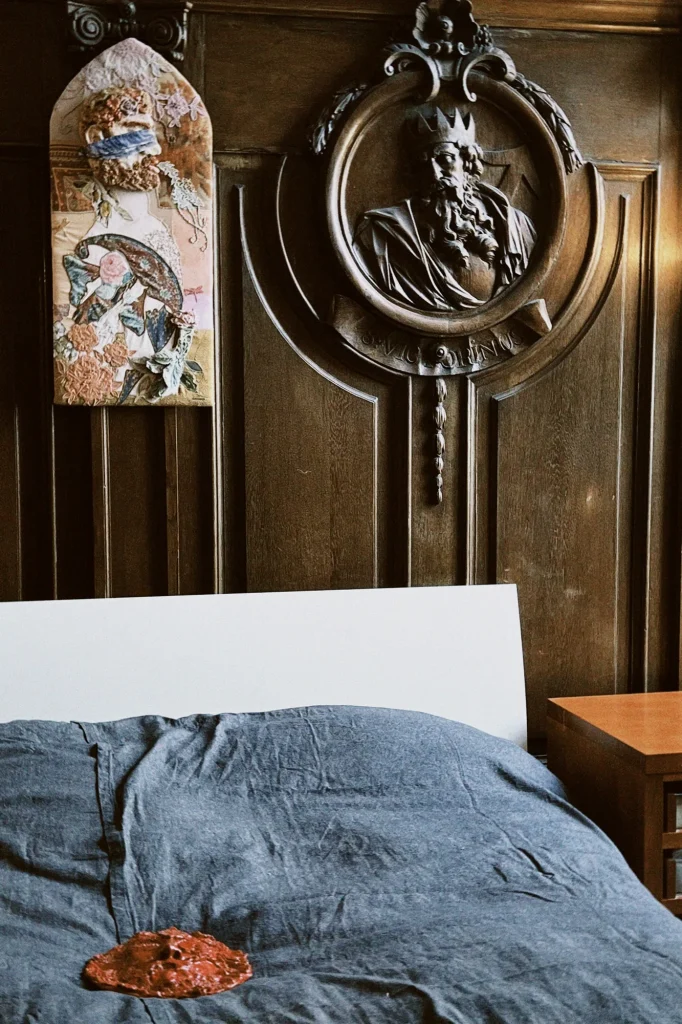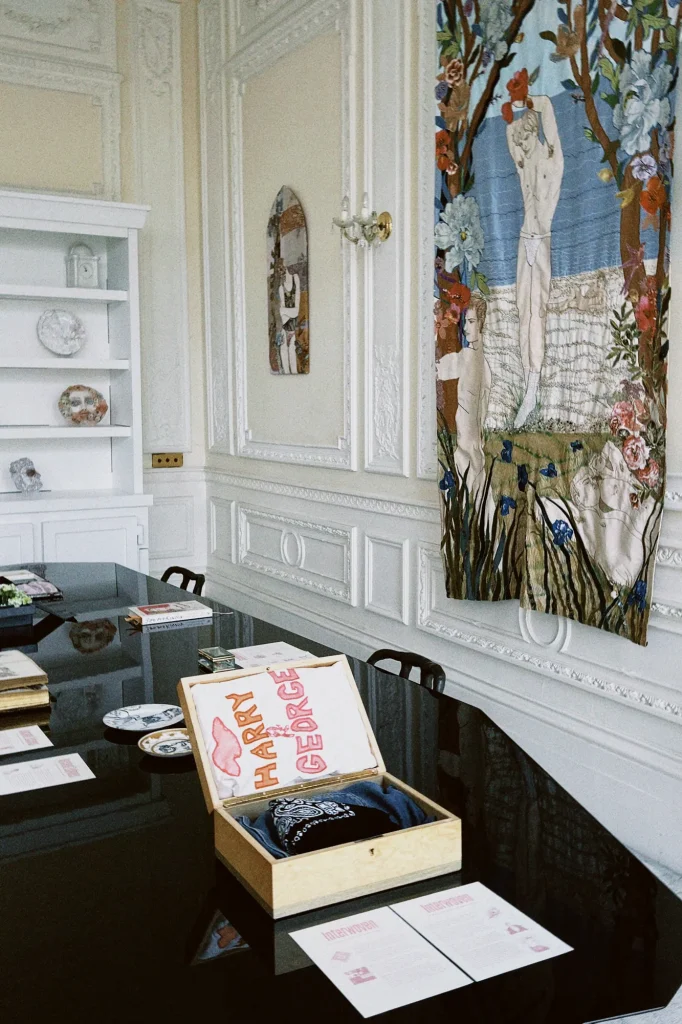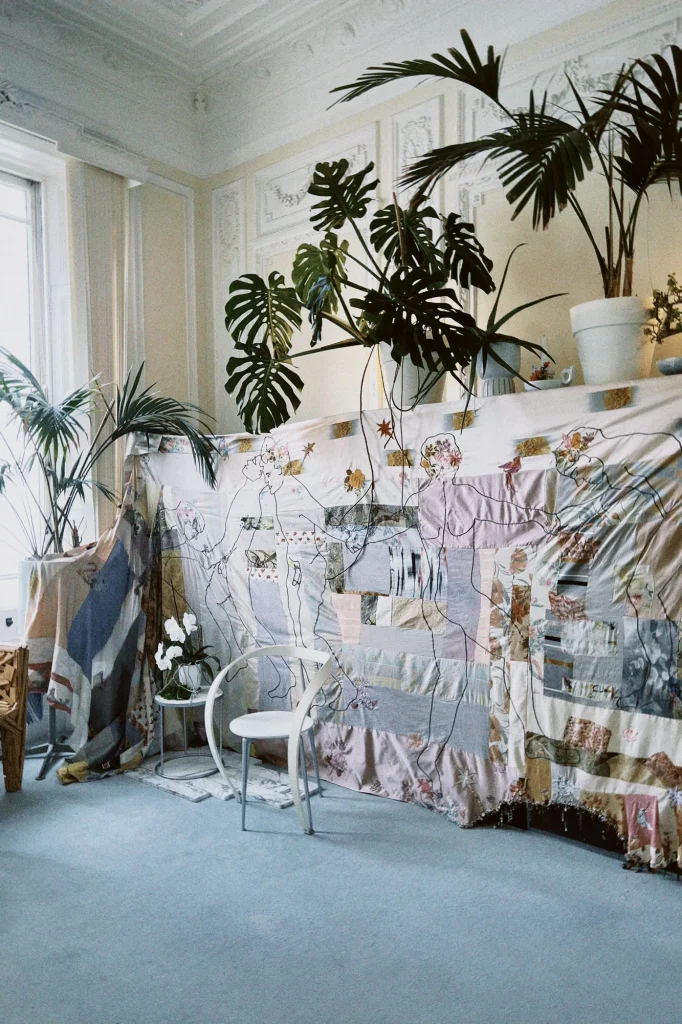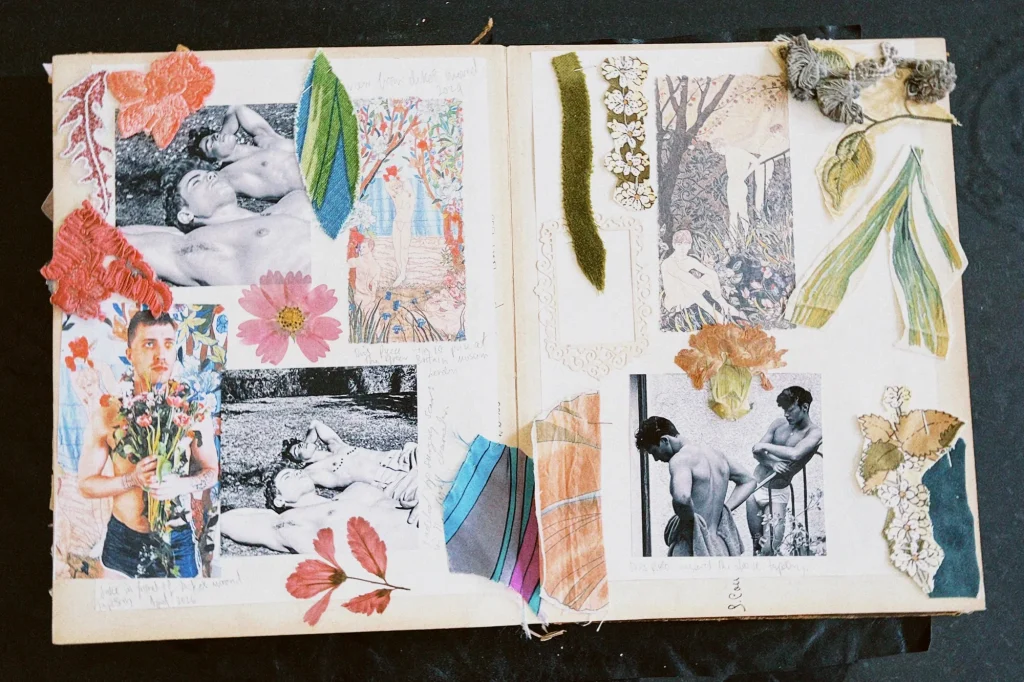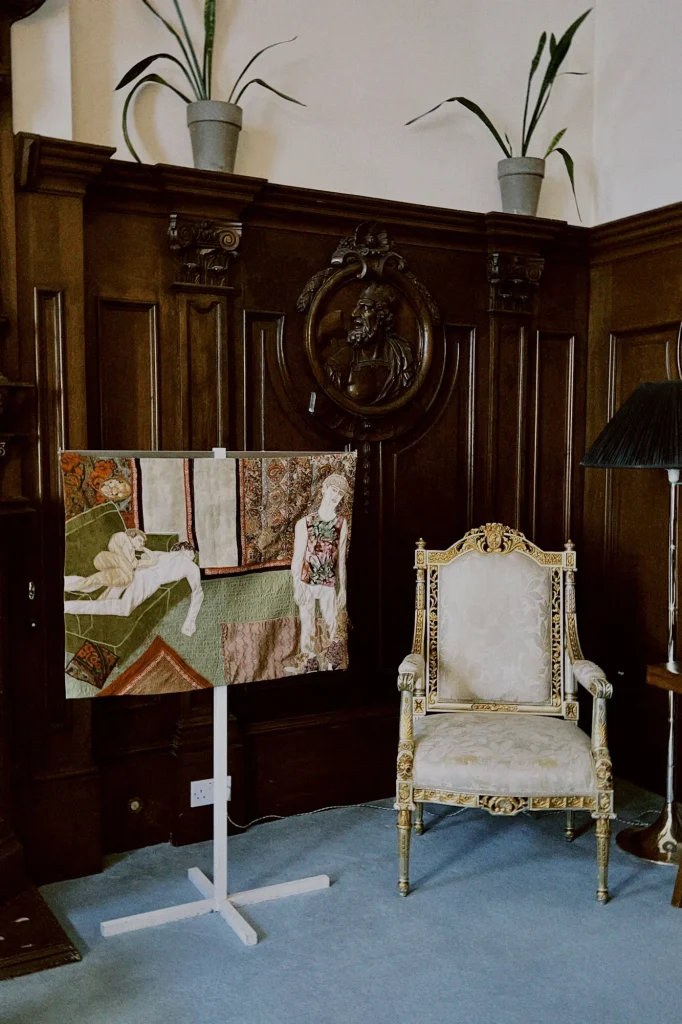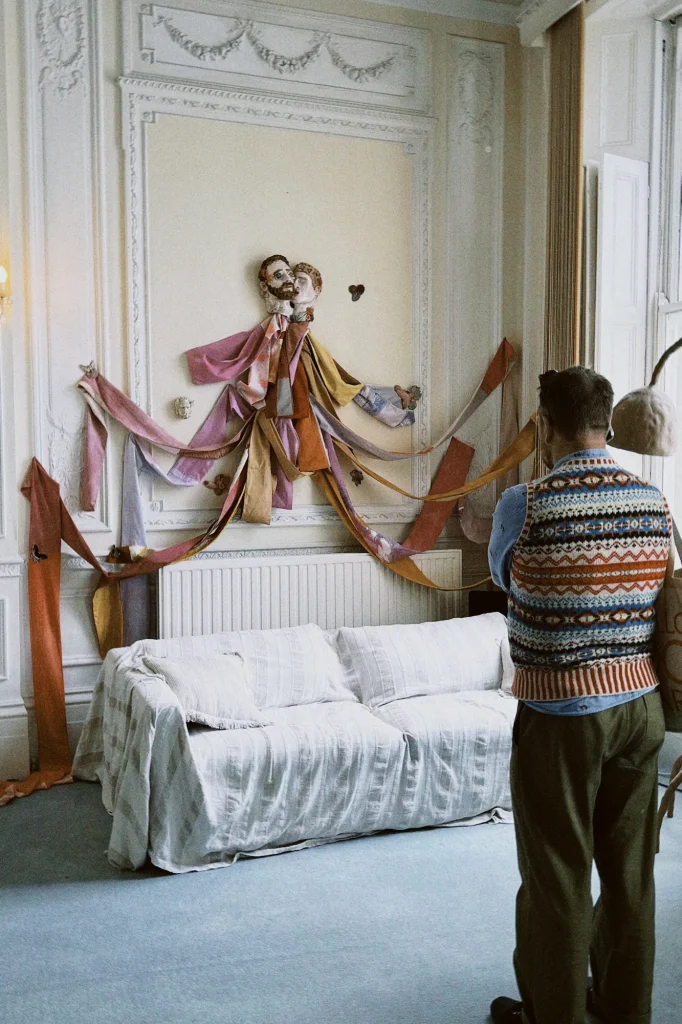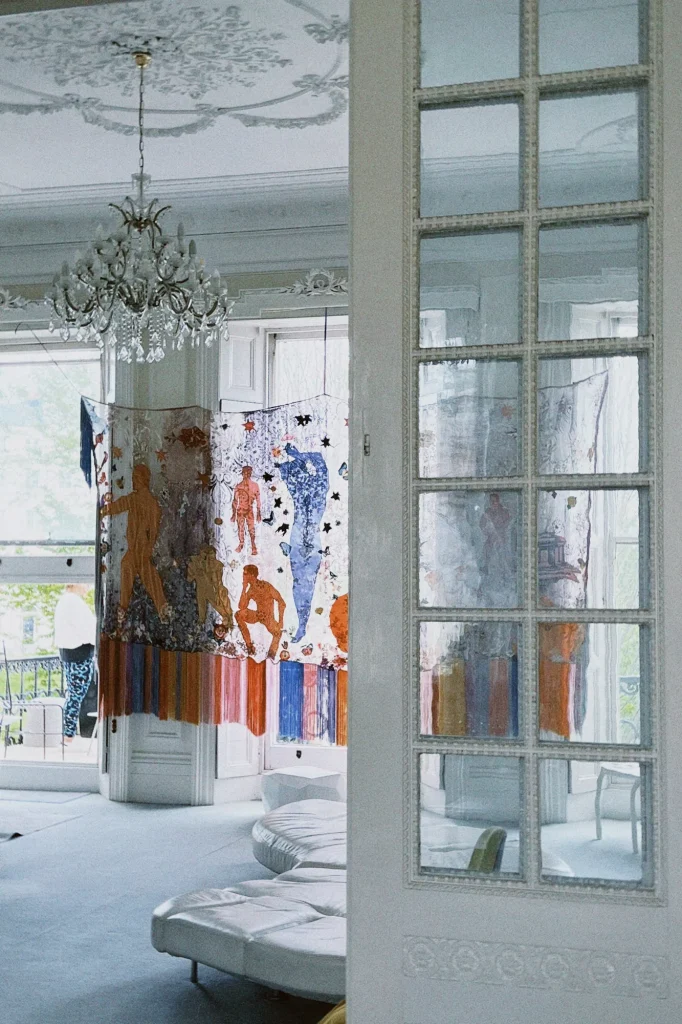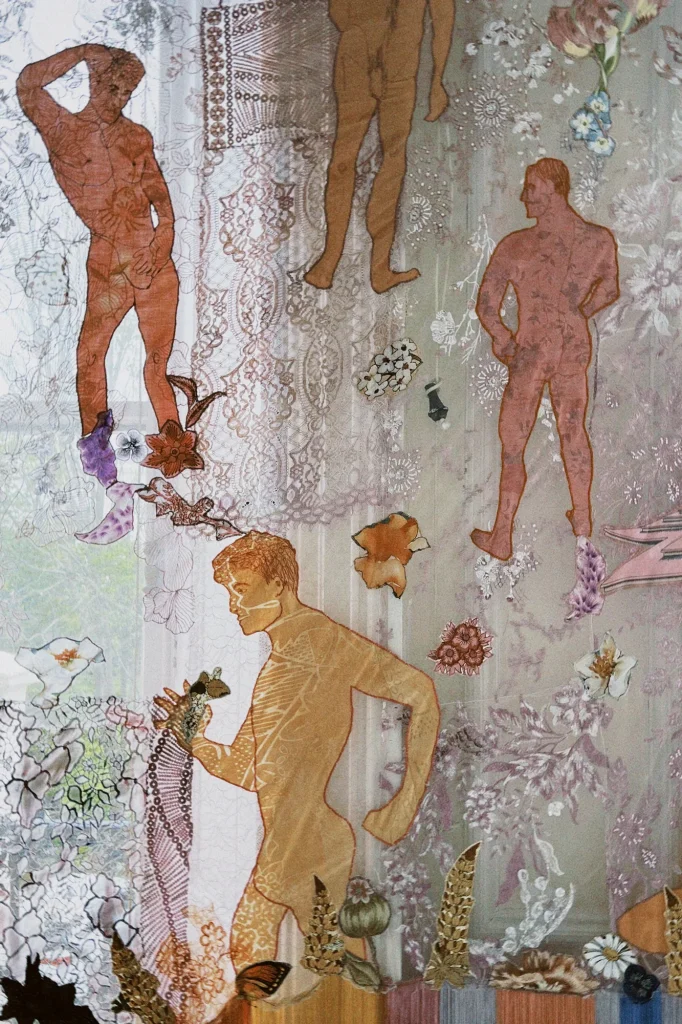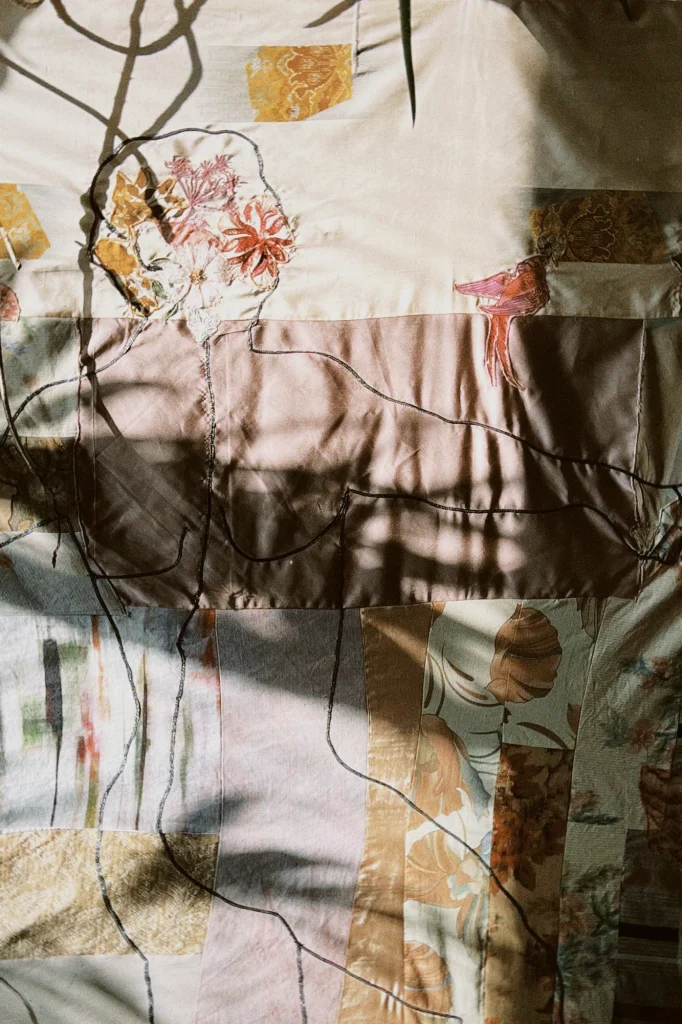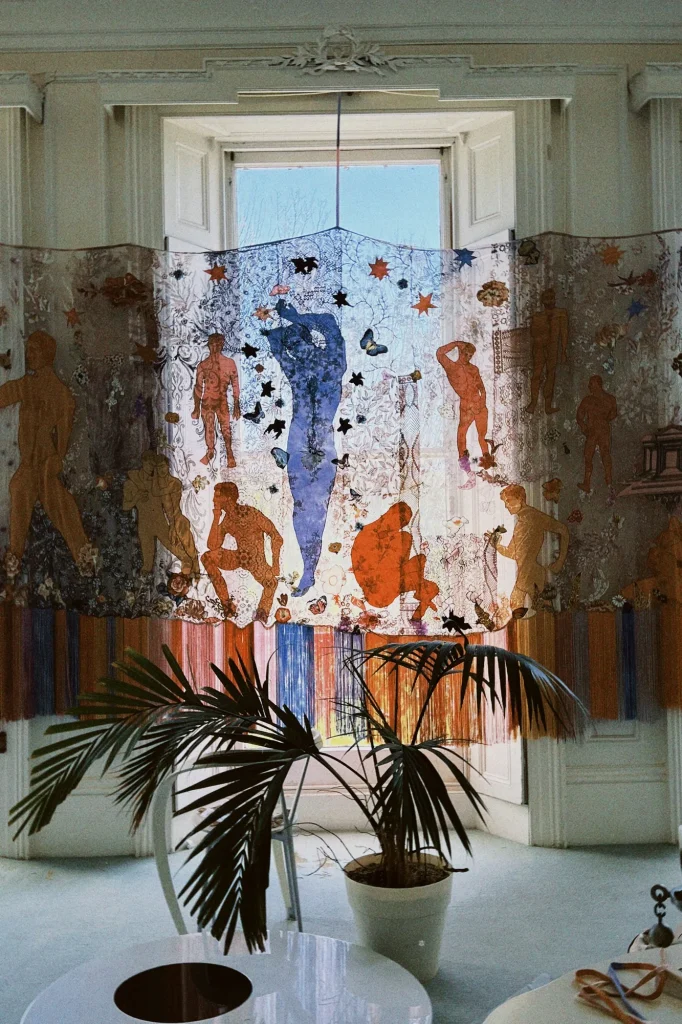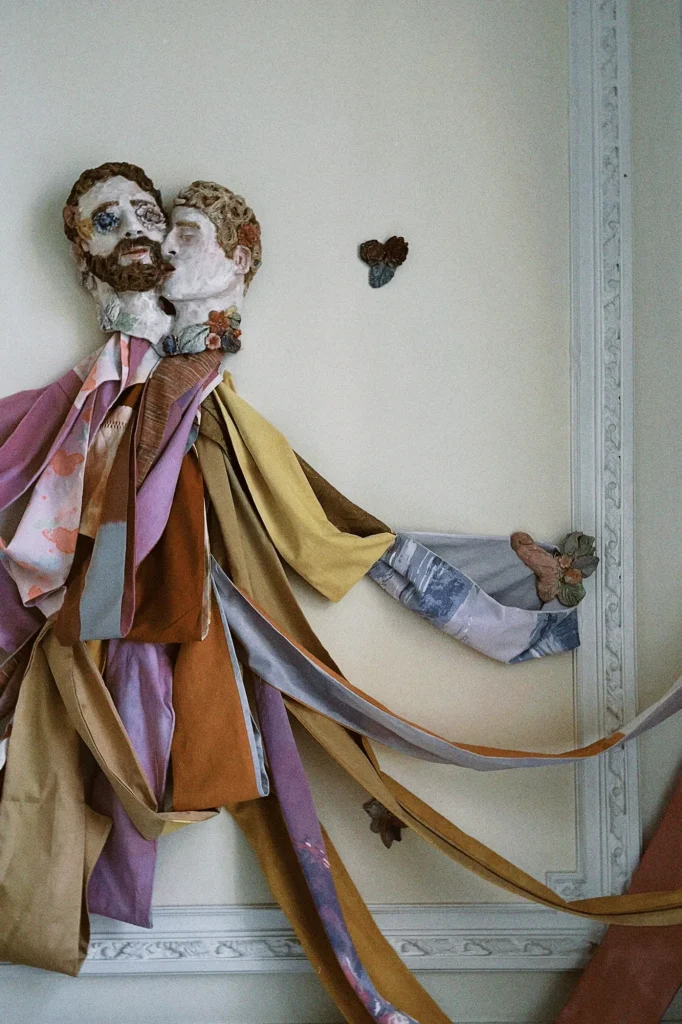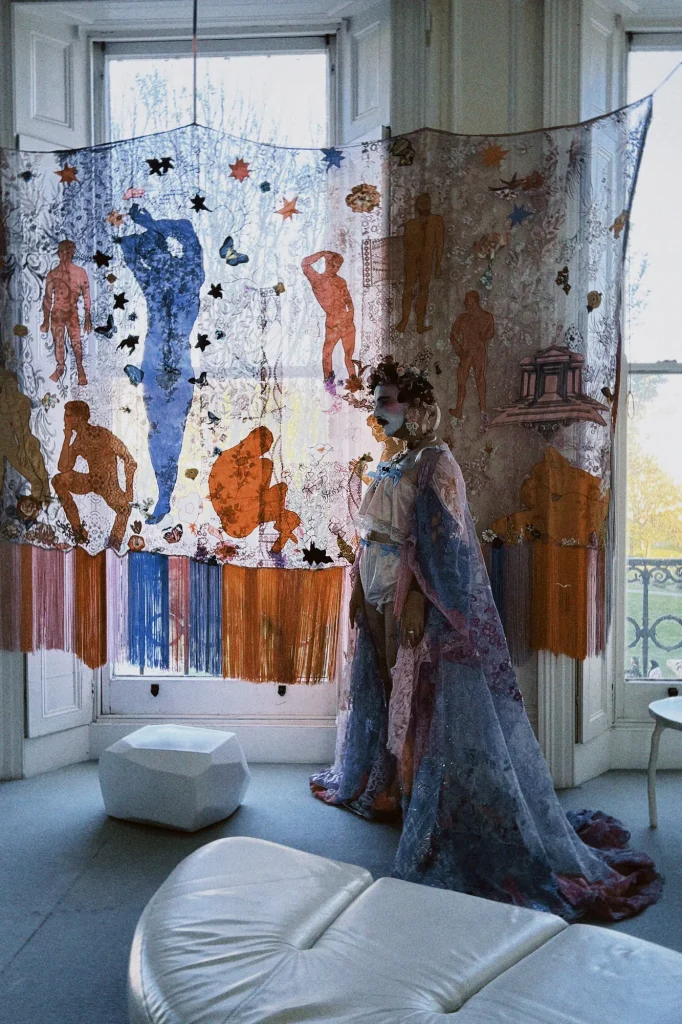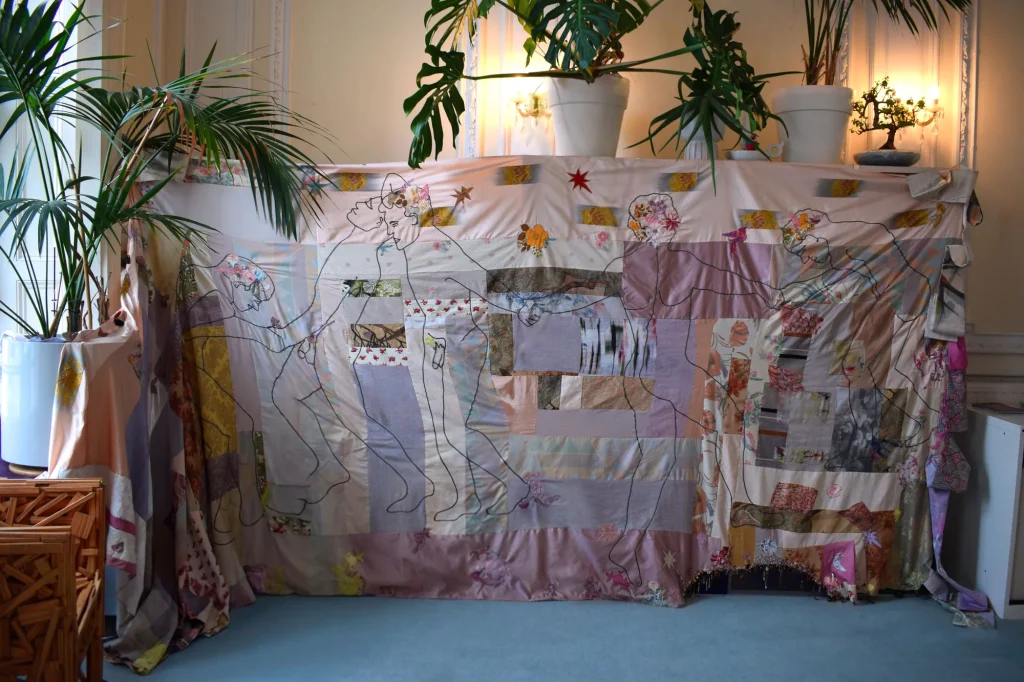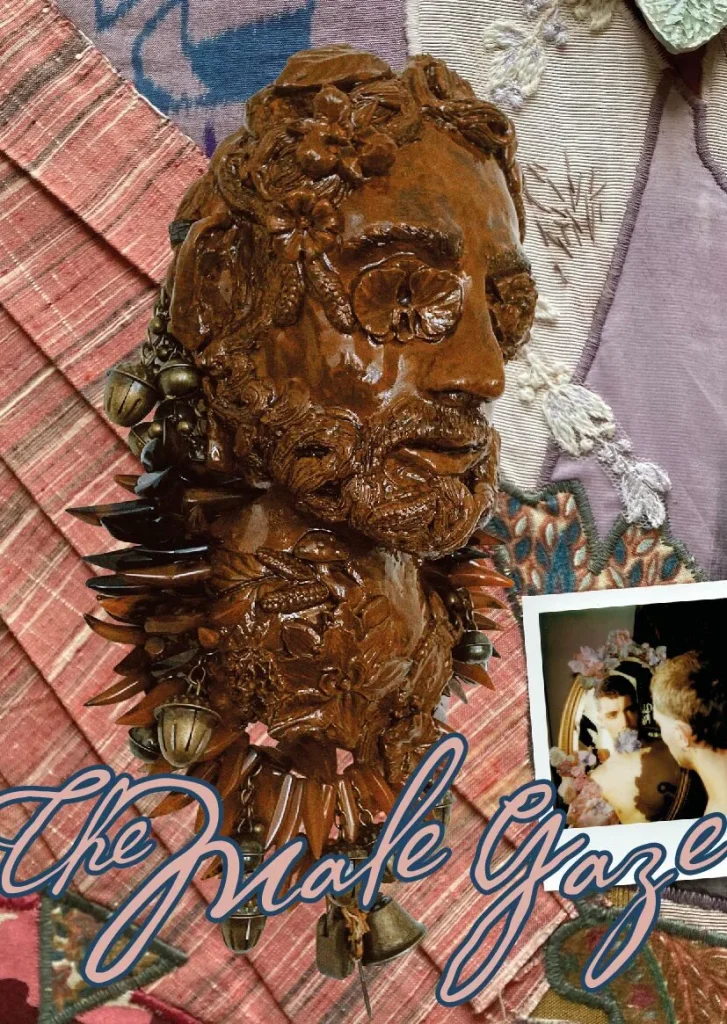
The Adelaide Salon presents The Male Gaze, an exhibition of works by Tony Mentel exploring queer history through needlework, woven work, mark-making, and ceramics. Drawing on craft traditions and religious iconography as sources and references, the works question authorship, labour, and inherited ideas of masculinity.
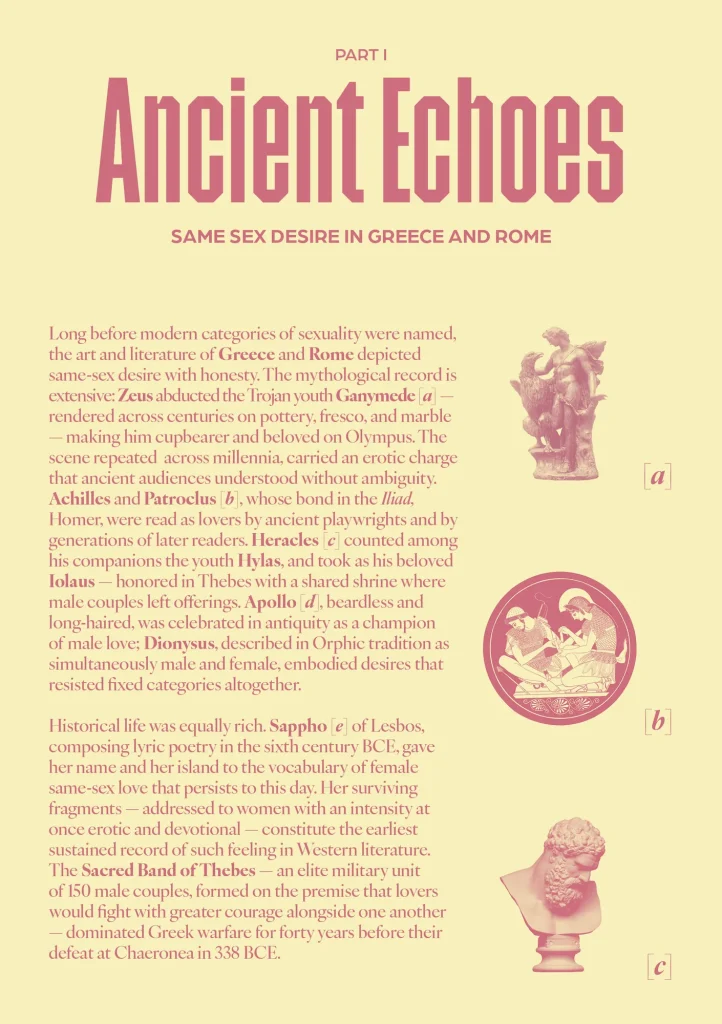
Mentel’s practice is concerned with how stories survive. Queer histories have rarely been told on their own terms. Ancient Greek and Roman mythology is different. Those traditions held queer stories openly, without apology. But much of what came after worked differently. Through later centuries shaped by persecution and taboo, queer narratives were folded into other forms: encoded in decorative arts, passed through craft traditions, hidden in visual allegory. These were languages built under pressure, readable only to those who already knew what to look for.
For Mentel, this isn’t abstract. He grew up in Waltham Abbey, a quiet town outside London, where the only openly gay men he knew ran a local tea shop. When one fell ill and died of AIDS in the early nineties, the town turned on them both. Two men who had been part of the community were cast out. The other disappeared. For a seventeen-year-old quietly recognising himself in them, it was enough to push him back into the closet for years. The Male Gaze is, in part, an act of remembrance for George and Harry, and a reckoning with what their visibility cost them. Their story is the reason this exhibition exists.
The medium matters. Needlework, tapestry, ceramics, and the applied arts have long histories of being practised mostly by women, and that’s exactly why they were not taken seriously as art. They were excluded from the canon, credited late or not at all. With that exclusion came a cultural rule: these are feminine arts. Men do not do this. A man working seriously in these traditions cuts across both assumptions at once. He inherits the invisibility imposed on the women who built the form, and refuses the boundary that was meant to keep him out. That refusal, in itself, is a queer act.
Materials carry their own histories. Recycled fabrics and beads, things once worn against skin or passed between people, bring traces of those lives into the work. Their richness and tactile detail draw you in slowly. The subject matter, often raw or difficult, arrives only once you’re already close.
The mythological figures here come from traditions where bodies transformed routinely: gods became animals, men became constellations, identities shifted under pressure or desire. Mentel isn’t interested in grandeur. He’s interested in what these stories take for granted. Change was just how things worked in those traditions. For queer experience, that assumption carries a different weight. Identity isn’t fixed. It’s made, remade, survived.
This is an exhibition about what gets buried and what persists. About the people who carried something forward without knowing anyone was watching, and the art forms that survived by being underestimated.
In honour of George and Harry.